Blog Posts

Aladdin’s Lamp: careful what you wish for in that XR world.

“International discourse!” “Intercultural fluency!” “Better faster cheaper!”:  the creative industrialists were all out and about, alive and kicking and extolling the virtues of all manner of creative technologies at the Beyond 23 conference held in London this week.

XR, VR, AR and of course MR were all out there strutting their collective stuffs in their usual shiny optimistic and slightly crazed ways although I missed the moments when HR and ER made their brief but, so I’m told, stunning appearances. Whilst it wasn’t too long (about 15 seconds) before AI got its first mention; it took a good two days before we were formally invited to settle into discussing the relative merits or otherwise presented by the Metaverse.

Two days is a mighty long time in these better faster cheaper days and you could be forgiven for thinking that what might have been hot off the press on Tuesday morning was just-so-yesterday by the time the conference closed on Wednesday afternoon.  It’s one of the challenges of assessing the Aladdin’s Cave that the creative technologists open up for us; is the person in front of me the answer to our economic prayers? Or a contemporary example of a Swiftian Projector, who, like their historical peers trying to extract sunbeams from cucumbers or turning ice into gunpowder, are destined to cheerfully race around the hamster wheel of non-progress for the rest of their lives?  Or for the next week at least?

This week’s Aladdin’s Cave housed all manner of alluring promise, with many genies being let out of lamps of different shapes and sizes.  There was one which conjured up images of how the creative industries could assist the Gulf’s dependency away from oil; another summoned up the installation of 1000 new arts works in Saudi Arabia over the next year; another promised success at winning The Attention Game.

The Attention Game is very difficult to win these days, whether you’re temporarily a resident of this Aladdin’s Cave, or a bored office worker who’s seduced by the promise of weight loss, improved golf technique or total personality restructuring that TikTok offers you during those long boring meetings when no one has anything better to do than scroll through their mobiles and say things like, ‘what we really need to this problem is a creative solution’.

And the trouble with the Attention Game is that its main players are so good at turning your attention away from what’s just captured it, that it becomes a struggle to really understand what it was that grabbed your attention in the first place and look beyond the surface of what it is actually promising.  

Those 1000 Art works in Saudi for example; just because you can buy and install 1000 pieces in the time it takes to drill a new oil well, does it really mean that you have the interests of those artists at your heart?  And that promise to tell the story of a nation in a glorious new national museum… wait a moment, whose particular story are you telling here? And your promise to replace your child’s ‘crappy drawing’ from school with an image generated by the AI programme Midjourney: is this really how you want to support your child’s development?

Just three examples over the 2 days when I wanted to say Stop!  Please say that again!  Did you really mean that? But unfortunately, the pace of change, the impatience of ambition and the busy-ness of business means that those moments for critical reflection were simply blown away by yet more genies constantly being conjured up out of yet more Aladdins’ lamps. 

Having the ability to summon up a proliferation of alluring, disposable and readily forgettable content may indeed be inevitable, but like the genie being summoned from Aladdin’s lamp, we’ve got to be careful what we wish for.  Not all genies are like Robin Williams.

Is there life after (funding) loss?

When I started working at The Mighty Creatives (TMC) in 2016, people used to ask me: “What is The Mighty Creatives?” Swiftly followed by: “What’s an Arts Council Bridge Organisation when it’s at home?” 

And that would generate more questions along the lines of: “What does being an arts infrastructure organisation mean? Why don’t you just give the money directly to the organisations delivering the arts and cut out the middlemen?”

Before TMC, I asked the same questions myself. The purpose of the Bridge organisation network seemed vague, but it brought together an array of organisations from cultural heavyweights to new kids on the block who had spent over a decade cutting their teeth in the Creative Partnerships movement. 

We were all bound with one common vision: to improve the lives of children and young people by connecting them to their local cultural education offers.

Unconstrained and unshackled

With the conclusion of the Bridge network earlier this year, and an unsuccessful application to join ACE’s National Portfolio for 2023-26, TMC is no longer a Bridge organisation and no longer part of a national infrastructure network. 

It is, however, still committed to delivering on its core purpose, established over 14 years ago, to transform the lives of children and young people through the power of arts and culture.

We are now free to determine our identity and place in the world unconstrained by a national arts funding policy. As a freestanding independent charity, we now have the challenge and opportunity to strike out on our own and structure our business growth cycle, unshackled to a timetable set by a national funder.

It’s like being a teenager whose parents have decided it is time they left home, waving them off with a battered suitcase, a handful of cash and some YouTube videos on how to keep resilient in these times of economic stress.

Recipients of TMC’s Youth Empowerment Fund. Photo: Gavin Joynt

Diversification

Fortunately, this teenager had spotted the signs some years before and had made significant preparations towards that first night in our own flat. We had diversified our income base by developing new services like our core creative mentoring service, looking beyond our historical base of the East Midlands to take up national and international opportunities. We set up campaigns to spread the word about our achievements and raised useful amounts of unrestricted income. 

This diversification positioned us so we were ready, organisationally, for that first night on our own, working out how to turn the heating on and every unfamiliar creak sending fear down our spines.

Organisationally ready we may have been but, as individuals, not necessarily ready for that big unilateral farewell. We had built a substantial staff team, several of whom had lived through previous NPO decision challenges and changes of national arts education policy. They held on to the belief that what we were doing was important to young people, their teachers, to artists and all who believe arts and culture are vital to a young person’s upbringing.

While we had to make 10 people redundant, we were proud of what our dedicated team had achieved as a Bridge organisation. We have since rebuilt a team relatively quickly, working with new partners in local authorities and virtual schools across the Midlands. And last month, we were delighted to be named winner in the Best Service Delivery Innovation category at the Third Sector Awards 2023.

Achieving independence

Our partners value the power arts, culture and creativity have on children and young people. Many in our Mighty Employers network recognise creativity – per se – is an invaluable asset in finding and keeping meaningful employment. There is demand for our work across the UK and we are exploring possible international support and testing whether we might have a role in Europe.

But we’re not taking these developments for granted and we’ll learn lessons from the past few years as we continue our journey. We’ll remember that public funding can be subject to political whims and fashions; and while young people’s mental health might be the current concern for funders, it may not be in five-years’ time. We’ll ask what new challenges they might face and how we will adapt to ensure our services remain meaningful and life-changing for them.

We’ll remember not to place all our eggs in one funding basket and that delivering our vision must be open to both what is possible and what might seem completely bonkers. We’ll remember to keep our strategy constant but our tactics flexible. And, in a few years’ time, hopefully, we’ll remember that leaving home was one of the best experiences of our lives. 

We’ll look back on that first night in our own flat fondly, realising how much we’ve grown, how much we’ve achieved and how many young people we’ve helped to embark on their own journeys into adulthood. And while we’ll be eternally grateful for the support and guidance of our parents while we lived under their roof, we’ll now have an independent family of own who continue to deliver our vision of transforming the worlds of children and young people through the power of their own arts, culture and irrepressible creativity.

Party with people on stage and balloons

TMC’s youth board members celebrating Mighty Memories in March 2023

Photo: Electra Films & Photography

(First published in Arts Professional, October 2023)

Girl (and Boy) Power: how Team TMC became the ghosts in the ChatGPT machine.

Welcome Speech at the The Mighty Creatives (TMC) Mighty Memories event at Nottingham Contemporary on 10 March 2023.

Good evening, everyone. It’s fantastic to see so many of you here tonight, on what is a very special occasion. I’m here to say a few words about why we’re here tonight; how we got here, where we’re going and to thank those who have helped us on our way.

Last November, the whole of the arts sector was holding its collective breath for some major news which was going to impact on all our lives.  This was the news we had all been expecting for months and the anticipation had become unbearable for many of us. 

But then finally, after much nail biting and hair pulling, the news finally arrived: the Artificial Intelligence package ChatGPT chatbot was to be launched on the big wide world on 30 November. My birthday, funnily enough.

We were both thrilled and appalled at its implications for the creative and educational sectors.

For those of you who are yet enjoy its pleasures, ChatGPT is a search engine which has rapidly gathered attention due to its ability to generate detailed responses and articulate answers to questions across many domains of knowledge, including the arts and cultural sectors. Rapidly and in great depth.

Put simply, all you need to do to use it is type in a prompt – a question or instruction of some kind which is related to some kind of problem – and it comes up with an answer. Students can use it write dissertations, artists can generate novels using it and it has even been known to write business plan executive summaries, Happy New Year inspirational speeches from the CEO and much more besides. All in a couple of milliseconds.  

It is, in short, a miracle, the answer to all our Google search prayers.

There was another kind of significant thing that happened last November. This was the announcement from one of our long-term funders, Arts Council England, that they were, as they like to say, ‘disinvesting’ in The Mighty Creatives as a Bridge Organisation from April 2023.

Now this gave us a bit of a problem and the solutions were not immediately apparent.  So, who better to ask to solve this contemporary problem other than ChatGPT?  Could this chatbot help solve our existential funding problem?

So, we typed in the question:

What should a young people’s charity do if it loses 100% of its NPO funding from Arts Council England?

The cursor of ChatGPT blinked for a couple of milliseconds. And then for a few seconds more. And then for several minutes.  In the world of Artificial Intelligence, this constitutes a lifetime of waiting.  It was much like waiting to hear from the Arts Council itself, but we were patient.

After what seemed like interminable blinking of the cursor it came up with this:

Losing 100% of its NPO funding from Arts Council England can be a significant challenge for any charity, especially for a young persons charity.  (No shit Sherlock).

However, there are several steps that the charity can take to mitigate the impact of this loss of funding and continue to operate:

  1. Diversify funding sources.  Tick. We’d been doing that.
  2. Reassess programmes.  Double Tick.  We’d been doing that too.
  3. Reduce costs. Yeh. Obv. Triple Tick.

What they don’t tell you those ChatGPT people is that somewhere in all that intelligence there is a rogue element at work – a kind of ghost in their machine – which every now and then comes up with some mischief.  

So, the next few answers were a bit of a surprise.

  • Organise a food drive:  collect non-perishable food items from the community and deliver them to the funder.  Seriously?
  • Hand out free flowers: The charity can hand out free flowers to Arts Council officers in a park.  The flowers will brighten their day and bring a smile to their face.  Yep, seriously.
  • Organise a creative stunt to draw attention to the funding issue, such as a flash mob outside the funder’s office.

Well, we looked at that briefly by asking ChatGPT how we should do that but were met with silence, which got louder as the chatbot struggled with the constant challenges we threw at it.  

  • How do you tell the staff team that our entire funding has been cut?  Silence.
  • How do you tell our school stakeholders that their Artsmark programme is being withdrawn with no obvious alternative in place? Silence.
  • How do you deal with these anxious times of the cost of living crisis and spiralling energy costs?  Silence.

So much for ChatGPT we thought.

Whilst it can come up with plausible business plans in the matter of milliseconds, write inspirational CEO Speeches for New Year’s Day in the blink of an eye and even write welcoming addresses for CEOs to read out at organisational celebrations…  can it solve real world, human problems?

No, not yet.

To solve those problems, we had only one option: to turn to the humans in the whole of Team TMC.  Their collective skills, wit and human intelligence helped turn the funding crisis facing TMC into an opportunity for the charity to potentially survive, and perhaps even thrive.

So instead of ChatGPT leading the future in artificial intelligence, I’d like you to thank the real-world intelligence of the superheroes of Team TMC who are here tonight.

Working as our Mighty Team, they have individually and jointly helped imagine a new future for the young people we serve, invented new solutions to old problems, being discerning in identifying whether those solutions are brilliant or barmy, galvanised and engaged their colleagues and had the tenacity to deal with the nagging tiny problems which need sorting every single day.  

Every team is different of course and everyone has brought their own inspirations and personalities to the challenges we’ve faced.

There’s Amy: whose phrase, Fighting for the Creative Voices of Children and Young People, will continue to galvanise us in the years to come.

There’s Bee: whose mantra – Audience not Programme First’ is having an immediate impact on how we engage with future stakeholders and partners.

There’s Caroline: who invests the term ‘creative accountancy’ with a whole new, more noble meaning which allows everyone else to continue to explore tangents, pursue their ideals and continue with the art of making the impossible, possible.

There’s Emily Bowman: whose leadership and resilience in the toughest of times has meant that we can still stand here, alive and kicking; still making a big difference to the lives of the young people we serve. 

There’s Emily York:  whose journey from programme participant to co-ordinator to manager has led to her driving the biggest engine of change for us by leading our Youth Voice programme and our Creative Mentoring work in particular.

There’s Hazel:  whose impact on our teachers from across the region will be felt well into the future. She’s kept the cultural education flag flying high with us from the very beginning and continues her mission with Spark Arts for Children very soon.

There’s Hope: whose social media nous and TikTok music videos in those early stages of the pandemic, cheered us all in those early pandemic months.

There’s Kate: who’s expertise in combat juggling, cascade juggling, Joggling and Rubenstein’s Revenge means that we’ll be able to simultaneously spin many plates of different shapes and sizes in the most volatile of economic climates.

There’s Kevin: whose patience and dedication to building new cultural education partnerships the length and breadth of the East Midlands has been something to view with awe and respect.

There’s Levi: who’s bringing a whole new musical energy to our proceedings, which is going to be essential on our new adventures. 

There’s Lisa:  who said: I remember an inspirational teacher at Primary School who I think changed the trajectory of my life. He incorporated art into history projects, science, and literature. He also read amazing, quite advanced books to us and I just remember it opening a whole new world to me.  Her voice is now captured in our business plan for the next five years and will help us remind us of the why of what we are doing.

There’s Lorrie: who has been central to making a real difference to young people and their families in poverty by doing much of the heavy lifting of our Let’s Craft arts packs which we’ve been distributing to foodbanks over the last couple of years.

There’s Louisa: who’s taken up the challenge of continuing to develop our relationships with schools through the Artsmark programme, through a time which has been marked by times of confusion, lack of clarity and mission drift from our previous funder.

There’s Rach: who confidently informs us about the impact we’re having outside of the organisation through her complete engagement with our Customer Relationship Management systems over the years.  

There’s Ryan who since taking on the role of Income Generation Co-ordinator has stepped up to the demands of the post and provides us with invaluable bid writing support, something we’re going to rely on a lot in the years to come.

And there’s Sophie: whose interest in developing our digital presence and engagement with external organisations has been essential over the last couple of years. No doubt she’ll have something to offer the ChatGPT community some valuable insights about how to improve their rogue infested chatbots!

But there’s other layers to Team TMC.

We have our patrons of Mike Batt and Marcellus Baz who advocate for us across the country; and our excellent ambassadors of Rajesh Bajaj, James Brindle, David Davies, Ian Kerr, Janice Owen, Jeremy Simmonds, Maggie Welton and Martin Wright who have continued to provide much needed fuel and energy for all our campaigning activities through regular and substantial individual donations of time and money.  Thank you all. Especially to our Chief Ambassador. You know who you are.

But I also want to thank  our trustees who you’ll meet scattered around the room tonight.   Nikki, Pat, Emrys, Jordan, Vivek, Raquel, Mandi, Vicky, Leigh: thank you all for your faith in our vision and for your support in bringing it to fruition, tirelessly and without complaint.

And I have to offer a very special thank you to our outgoing chair, Felicity Woolf.  

Felicity, back in the day, we would have had Eamon Andrews walk on from behind a curtain and say, Felicity Woolf, This is Your Life! And he would hand you a large leather-bound album and slowly reveal lots of surprise guests much to your delight or consternation, depending on who walked out from behind the curtain.

You’ll be delighted to know that I won’t be channelling my inner Eamonn Andrews tonight.

But I would like everyone to know and appreciate that the six years we have worked together have been one of the productive working relationships I’ve ever witnessed between 2 people in our roles.  

We didn’t know each other before we started working together; but Felicity came into the organisation at a time when it was reeling from another crisis of a different nature, and consequently facing another existential threat to our reputation and organisational mission.

She set about redefining the role of our Chair, adding new energy, insights and challenges to all aspects of the organisation.  More than a figurehead, more than a status symbol, Felicity has been a real leader through some very difficult but also some delightful and inspiring times over the last six years.

I thank you all: Let’s hear it for Team TMC.

10 March 2023

The final 55th day of the Big Shut Up? Not bloody likely.

Following the recent outcome of our Arts Council England (ACE) National Portfolio Organisation (NPO) funding bid, we are disappointed to announce that our application has been unsuccessful on this occasion.

The Mighty Creatives team is incredibly proud of the work we have achieved over the past 10 years as the ACE Bridge organisation for the East Midlands. Since 2018 (to July 2022), this has included:

  • Generating £1.4 million in match funding for Partnership Investment – including an additional £4.5 million to develop programme beyond ACE funding such as Splash!, Kickstart, and Creative Mentoring.
  • Supporting the development of 9 Local Cultural Education Partnerships.
  • Delivering 19,357 Arts Awards.
  • Supporting 16.5% (363) school settings to embark on their Artsmark journey in 2022 and engaging 52% of schools (1172) in wider activity across all programmes.
  • Engaging 48 NPOs, 708 ‘other’ arts and cultural organisations, 48 Heritage sites and Libraries, and 1172 schools across Primary, Secondary, Special Schools and Pupil Referral Units (PRUs).
  • Delivering over 850 training, events and workshops to support our partners, and empowering 530 young people to move from Not in Education, Employment or Training (NEET) to in Education, Employment or Training (EET).
  • Engaging 2,402 children and young people in direct delivery, reaching a further 218,000 through our programme delivery and partnerships.

The Mighty Creatives would like to thank Arts Council England for their continued support over the past 10 years. We express our ongoing thanks and respect to our dedicated, knowledgeable, and ‘mighty’ staff team who work tirelessly and with devotion to make our vision a reality. 

Our deepest and wholehearted gratitude is sent to all the inspiring organisations, schools, funders, artists, consultants, freelancers, and fundraisers, across the region and beyond, who have worked with us to help transform the lives of so many children and young people. 

Of course, we would like to especially thank the region’s young people who remind us every day why our work matters.

The Mighty Creatives remains steadfast in our commitment to our vision and mission, and to supporting young people in need across the East Midlands region. Our focus for the future centres on continuing to deliver our work as a Bridge organisation until 31st March 2023, and our commitments to other funders, while making plans for the transition period that will follow. Since our Creative Mentoring  programme has confirmed funding from Children in Need, this service will continue to be provided. We are exploring new funding options to ensure the sustainability of this and all our other programmes in the long term.

Our dedicated Senior Leadership Team and Board of Trustees are currently exploring alternative options and funding opportunities to ensure the long-term sustainability of the charity – so that we can continue to make a difference to the lives of children and young people at the heart of our organisation.

If you would like to speak to us about how your organisation could work with us in the future, please email our CEO, Nick Owen, at nick@themightycreatives.com

(Press release from The Mighty Creatives, Friday 4 November)

Day 54 of the 26 Day Big  …. Up: Reimaginings

After a long period of silence, Arts Council England are announcing the results of their long-awaited investment decisions on arts funding tomorrow!

The Mighty Creatives are waiting in trepidation along with everyone else in the sector. So, in the spirit of hoping for the best but planning for the worst, our period of not-quite-silence on the reflections of our past and re-imaginings of our futures continues unabated.

If this period of not-quite-silence is getting on your nerves, you could do a lot worse than to support our the Mighty (UN)Mute  campaign here. One thing I promise: if you can help us reach our target, I’ll never ask you ever again!  You will have well and truly shut me up 🙂

Today’s reflection:  come expect a miracle

Ambling through the back streets of a market in Port of Spain, Trinidad, you come across a church – modestly rebranding itself as the Jesus Miracle Centre – with the claim that should you wish to visit it, you can ‘come expect a miracle’ no less.

Expecting a miracle is perhaps something we’ve gotten out of the habit in recent years, depending as we do on rational, positivistic ways of thinking that persuade us that without ‘x’ input, then ‘y’ output is impossible: that the imagination and dream land are concepts best left in the hinterlands of the Australian outback and that everything in this world is determinable and forecastable, if only we had enough clean data available at our disposal.

We don’t talk often enough about miracles and we’re certainly not encouraged to expect them – and perhaps we should. 

Expecting a daily miracle might just help us deal with the imminent threat of economic meltdown, global warming up and England being beaten by Germany on penalties in the Qatar 2022 World Cup.

Day  53 of …  26 Day Big  …. Up: Reimaginings

After a long period of silence, Arts Council England are announcing the results of their long-awaited investment decisions on arts funding on Friday 4 November.  Just 3 days to go before the Big Reveal!

The Mighty Creatives are waiting in trepidation along with everyone else in the sector. So, in the spirit of hoping for the best but planning for the worst, our period of not-quite-silence on the reflections of our past and re-imaginings of our futures continues unabated.

If this period of not-quite-silence is getting on your nerves, you could do a lot worse than to support our the Mighty (UN)Mute  campaign here. One thing I promise: if you can help us reach our target, I’ll never ask you ever again!  You will have well and truly shut me up 🙂

Today’s reflection:  new horizons, home and thanks to the 2.6 Cycling Challenge

The Covid-19 crisis has shone a beacon on people’s innate creativity throughout the crisis and one of the post Covid-19 challenges for many of us working in the cultural sector will be how to harness this community buzz and demonstrate how creativity has been a vital part of people’s resilience to the challenges they’ve faced.

Public Art though is still a bit of a conundrum for me.  Every now and then on my travels I encountered odd pieces of public art whose purpose was baffling and whose aesthetics were indisputably challenging. Another cliché but still as true: roadside flora doesn’t need a purpose but just look splendid.  Perhaps we should rethink art in a similar way: there’s no need for art to have an instrumental purpose, but just to be enjoyed, celebrated or castigated for what it is.

Day 26 of the Cycling Challenge finally arrived and Janice, Sally, Hania, Tom and Stash made my return home really joyful.  

Their celebrations made that final 100m stretch a real pleasure for the first time in 26 days and prevented me from hopping off the bike and ambling home up the hill unnoticed. When Day 26 was done and dusted a story of several numbers emerged:

Over 405km cycled…

Over 2170m climbed…

Over 46 hrs en route…

Over 75 ‘A-Ha’ moments of discovery…

I’m especially thankful to all my donors who helped make this campaign happen: The 2 Andys, Carl, Chris, the 3 Davids, Eleni, Emrys, Felicity, Janice, Jo, John, Jon, Jordan, Kevin, Kim, Laura, Lew, Marie, The 2 Martins, Nadine, Nick, Nigel, Pam, Paul, Raj, Rajesh, Rav, Roxie, Ryan, Sally, Tom and Vivek: thank you all so much.  And to all you anonymous donors: I couldn’t have done it without you too!

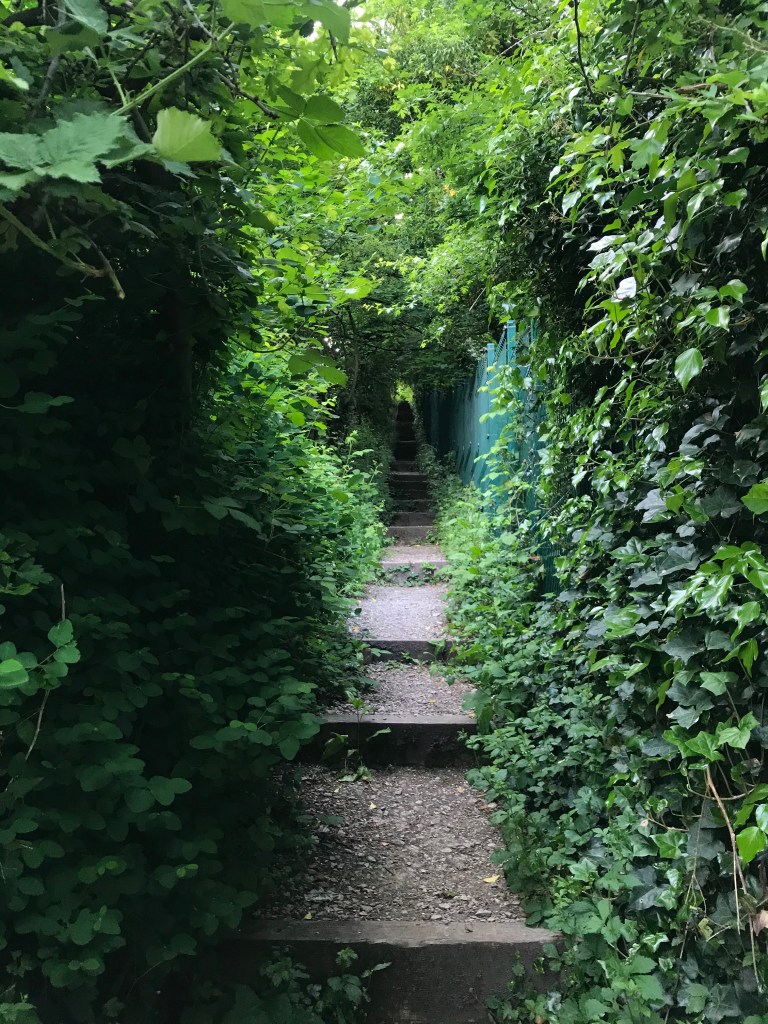
Thank you, Jon, for your advice on how to carry a bike. This was much needed at the 49 Steps of Sycamore Park in St Ann’s which clearly hadn’t had any human visitation since the Ice Age: and thanks to How We Roll for technical expertise on the Tiger Hazard-mobile.

My cycle challenge was part of the wider Mighty Creatives team challenge in which staff, trustees, friends and family all chipping into the team effort. Everything from running, cycling, walking the dog, working out, exercising, crocheting, learning German and lip-synching music theatre on TikTok: our team’s ingenuity knew no bounds!  All in all, we raised over £5,200 for children and young people in care (double our original target!)

If you’d like to know more how the funding has made a difference to their lives, please feel free to get in touch.

And if you’d like to lend a hand… or a couple of feet… just check out what we went on to do next…

Day  52 .. …  26 Day Big  …. Up: Reimaginings

After a long period of silence, Arts Council England are announcing the results of their long-awaited investment decisions on arts funding on Friday 4 November.  Just 4 days to go before the Big Reveal!

The Mighty Creatives are waiting in trepidation along with everyone else in the sector. So, in the spirit of hoping for the best but planning for the worst, our period of not-quite-silence on the reflections of our past and re-imaginings of our futures continues unabated.

If this period of not-quite-silence is getting on your nerves, you could do a lot worse than to support our the Mighty (UN)Mute  campaign here. One thing I promise: if you can help us reach our target, I’ll never ask you ever again!  You will have well and truly shut me up 🙂

Today’s reflection:  when in doubt, change the rules.

Like so much in life, I started with good intentions.

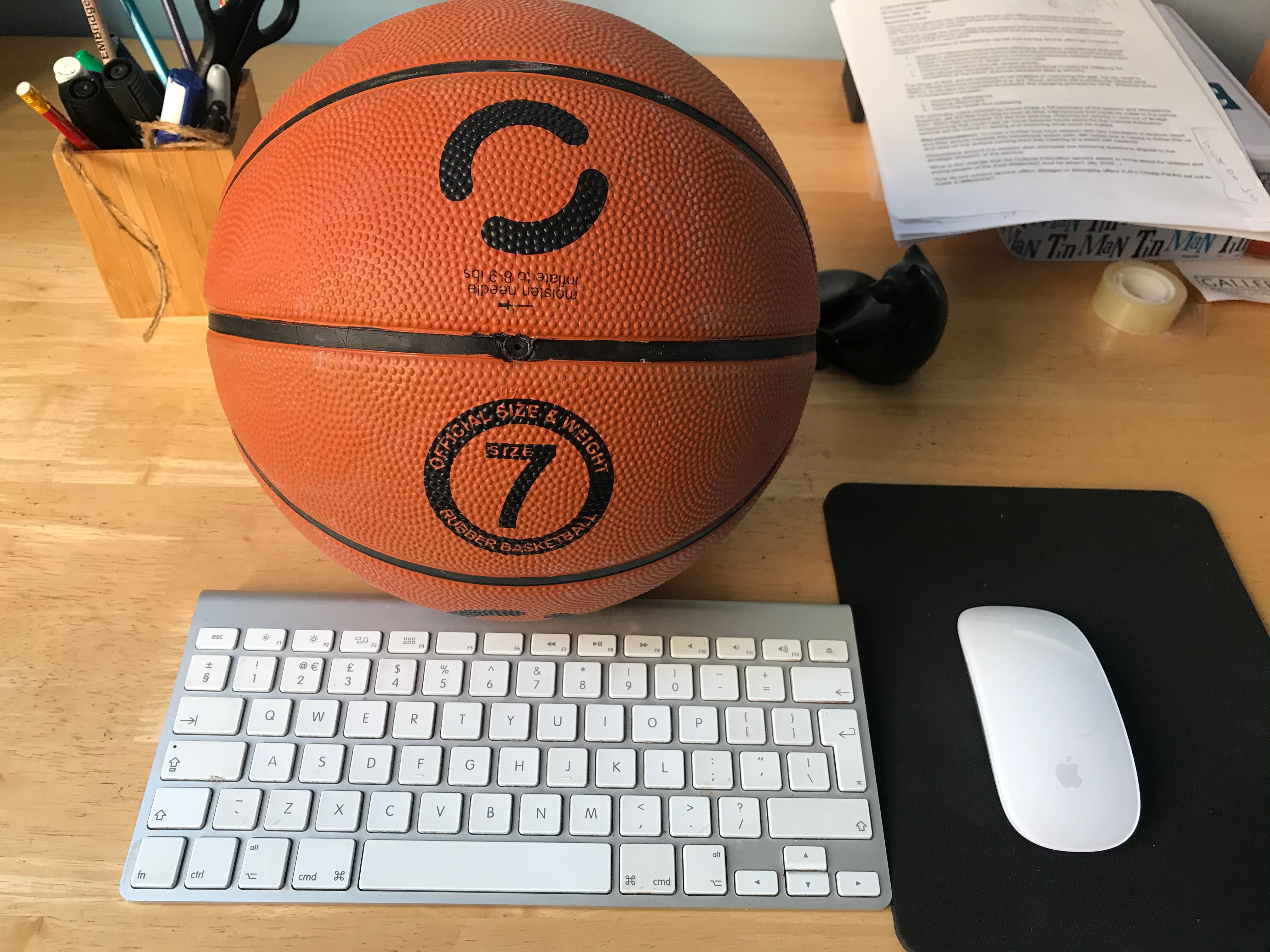
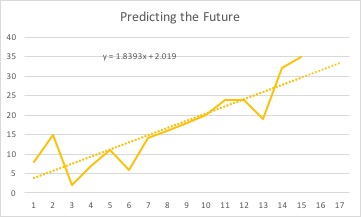
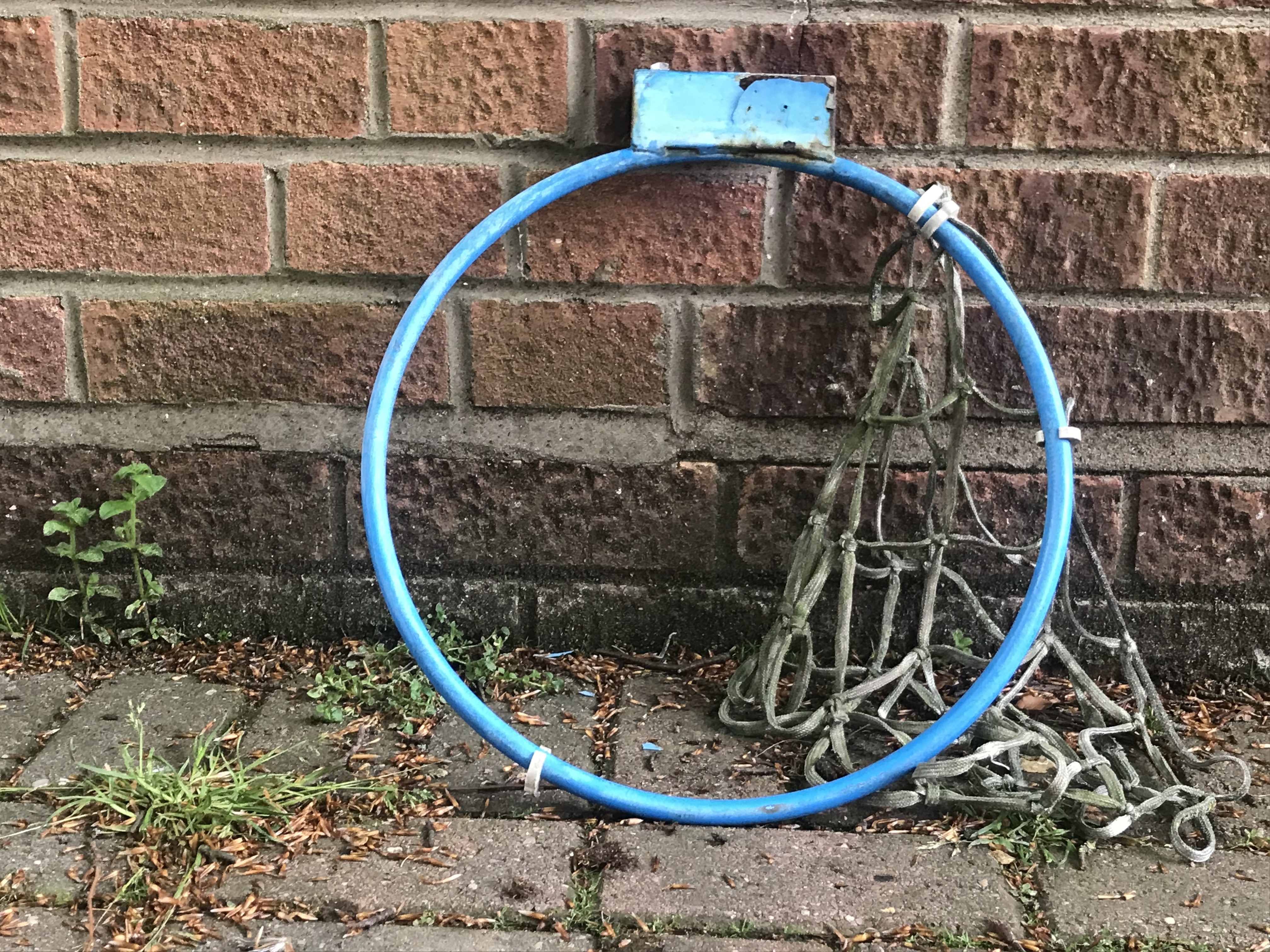
I’d planned (if that’s the right word) to throw a basketball hoop from a line, the regulation 15’ away from the hoop, 26 times and to time how long this took me.  And do this for 26 days with the intention to shorten that time on a daily basis. 

The first challenge was to find a basketball hoop and fortunately for me, our new neighbours had one stuck on the side of the kitchen wall, facing their driveway the width of which is about 18’.  They willingly agreed for me to use the hoop – probably because they’re away for much of the day and were probably privately relieved that they weren’t about to witness the bounce bounce pause thwack bounce bounce missed again dammit monologue that was to follow.

DayAttemptsNear MissesBasketsEffort (Baskets/ Attempt)Baskets/ Minute (BPM)FeelGood FactorTotal timeTotal ShotsTotal BasketsSuccess rate
1N/A08N/A0.308N/A268
21940157.73%0.577N/A5219423
31898721.06%0.07746.03%78383256.5%
419010773.68%0.26956.32%104573325.6%
5192105115.73%0.42354.69%130765435.6%
616710863.59%0.23164.67%156932495.3%
7174114148.05%0.53865.52%1821,106635.7%
9180108168.89%0.61560.00%2341,286634.9%
101661181810.84%0.69271.08%2601,452795.4%
111811212011.05%0.76966.85%2861,633975.9%
121761152413.64%0.92365.34%3121,8091176.5%
131791112413.41%0.92362.01%3381,9881417.1%
141761251910.80%0.73171.02%3642,1641607.4%
151671013219.16%1.23160.48%3902,3311928.2%
16147903523.81%1.34661.22%4162,4782279.2%
171541023724.03%1.42366.23%4422,63226410.0%
18170944828.24%1.84655.29%4682,80231211.1%
19167845432.34%2.07750.30%4942,96936612.3%
20157747044.59%2.69247.13%5203,12643613.9%
21163796640.49%2.53848.47%5463,28950215.3%
22178857441.57%2.84647.75%5723,46757616.6%

So, the first challenge was rapidly met and soon after the challenge of having independent verification was addressed too.  Our neighbour, Yvonne, volunteered to adjudicate the challenge and I gratefully accepted her offer. 

So, Day One dawned and all seemed straight forward enough.  I measure out a throw line 15’ from the hoop (informally known as the ‘Charity Stripe’ I’m reliably informed) with a measuring stick. Yvonne switches on her stopwatch. 

I remember the advice from Tahir about how to throw a basketball: BEEF, an acronym for “Balance” (yep, got that); Eyes on the target” (doddle); “Elbows at right angles”  (er… what?” “Follow Through” (of course, what else, it’s just like tennis. What could possibly go wrong?)

What could go wrong was of course pretty much everything.  Balance isn’t helped by running after a stray ball and then running back to the charity stripe to try again without stopping. The eye on the target is all very well if you completely understand which target it is you’re meant to have your eyes on.  The board?  The back of the hoop? The front of the hoop? The little logo half way up the board? Placing your elbows at right angles is all very well if you don’t expect to hold the ball in a particularly meaningful way. Follow through leads to a constant arc of optimism turning to disappointment as the ball repeats its trajectory of bounce bounce pause thwack bounce bounce missed again dammit.

After 10 minutes Yvonne is clearly worried about whether or not she has an evening to look forward to.  I have some managed to throw 4 balls into the hoop over this time and managed at least ten times more ‘ah, nearly’ moments. It looks like we might both have to stay about another hour or two if I’m to achieve the deceptively bland target of 26 hoops before retiring gracefully with a gin and tonic to assess how long it took me to do it.

After 20 minutes the success rate isn’t much better.  A further 4 hoops and a slightly lower proportion of “ah, nearly” moments.  A much higher ratio of “WTF is going on?” moments.

It’s at this point that I decide to follow all the best professional sporting advice and to decide to change the rules of the game.  Instead of timing how long it will take to throw 26 balls into the hoop, I’ll see how many I can throw in 26 minutes.  That way, we can see an end in sight and can thankfully retire to the comfort of a gin and tonic knowing that we shall live to confront another day of BEEF. The following six minutes yielded no more moments of success other than a relief that we could both get back to having a life that evening.

So, the final score on day one is 8 hoops over 26 minutes.  It does at least count as a baseline and if and when I get to throwing 26 hoops within the new target of 26 minutes, I will take heart that there has at least been some element of progression: especially if I can achieve it over the next 26 days.

Sport can quickly make a fool of you in a very short space of time and I have a feeling that this won’t the last time I remember that particularly embarrassing lesson.

(You can find out more about the 2.6 Challenge for 2021 here.)

Day  51 .. …  26  … Big  …. Up: Reimaginings

After a long period of silence, Arts Council England are announcing the results of their long-awaited investment decisions on arts funding on Friday 4 November.  

The Mighty Creatives are waiting in trepidation along with everyone else in the sector. So, in the spirit of hoping for the best but planning for the worst, our period of not-quite-silence on the reflections of our past and re-imaginings of our futures continues unabated.

If this period of not-quite-silence is getting on your nerves, you could do a lot worse than to support our  Mighty (Un)Mute  campaign here. One thing I promise: if you can help us reach our target, I’ll never ask you ever again!  You will have well and truly shut me up 🙂

Today’s reflection:  Measuring the Arts. Again. And again. And again…

Many of us in the arts and creative industries have gotten used to measuring our work and talking about it in terms of value, value added, gross value added and all those signals which try to suggest that we’re doing more for the world than simply making great art.

We keep a keen eye on our financial outputs through annual accounts, box office returns, projections and bottom lines as if we’re talking about the arts as a golden goose which is going to keep laying us lots of lovely Faberge nest eggs for our future retirement.  

We use a whole systems of Heath Robinson-esque paraphernalia to measure personal growth, family change and social wellbeing if we’re using the arts instrumentally to affect people’s health, mindfulness and general absence of psychotic tendencies; and we’re in thrall to audience engagement tools which help us understand who came to an event, why they came, which bit of Beethoven’s 5th they most enjoyed, which bit they least enjoyed and whether they’re more likely to return if we just play them the best bits over and over and over again.

This fetish for measurement never stops and there’s always someone somewhere who wants to measure it again. And again. And again. In different ways, with different criteria, with different emphases and with different toolboxes. All in their own way to prove, beyond incontrovertible doubt that there is more to great art than just great art. That it has other benefits which are more measurable and definable, and that if we could only understand what they were, the arts world – our world, your world – everyone’s world would be a damn sight happier place.

The trouble is, this desire to measure everything within an inch of its life is having precious little effect on the political movers and shakers and critical opinion makers who will listen to what they want to listen to, irrespective of the evidence of all that measurement.

For example, the case for the economic importance of the arts has been made ad nauseum since the 1980s and yet it seems to have little influence on the key politicians and decision makers of anyone’s generation. Every 6 months or so it seems there’s another arts funding crisis which uses the same rhetoric as 5, 10 and 20 years ago. 

For all the measurement that’s been going on, and for all the cases that have been made that the arts are good for the nation’s bank balance, its mental health and its artistic sophistication, there’s been remarkably little effect on the politicians who instruct the bean counters to change their thinking to any great degree. 

The only study that seems to be missing is the one which measures the effect that measuring the arts has on the measurers.

Perhaps one day we’ll recognise the futility of the measurement paradigm and accept that great art is just that – great in its own right, impossible to quantify, pin down and stick in a butterfly cabinet.

Day  50 .. …  ..  … Big  …. Up: Reimaginings

After a long period of silence, Arts Council England are announcing the results of their long-awaited investment decisions on arts funding on Friday 4 November.  

The Mighty Creatives are waiting in trepidation along with everyone else in the sector. So, in the spirit of hoping for the best but planning for the worst, our period of not-quite-silence on the reflections of our past and re-imaginings of our futures continues unabated.

If this period of not-quite-silence is getting on your nerves, you could do a lot worse than to support our Mighty (Un)Mute  campaign here. One thing I promise: if you can help us reach our target, I’ll never ask you ever again!  You will have well and truly shut me up 🙂

Today’s reflection: Act4Change: what binds us?

People say to me that there’s no such thing as the East Midlands. That the region is a figment of some politicians’ imaginations, cooked up in the back streets of Westminster back in the day when politicians carved up several regional and national boundaries, along with their breakfast bacon and eggs, not only here but across the world.

Many of you will know that Africa, the Middle East and the Indian subcontinent have all been on the receiving end of British politicians who have tended to cause disruption, distress and dismay with their arbitrary carving up of regions and communities so that people are left confused and bewildered about where they live, who their neighbours are and who they belong to.

A few years ago I was riding a train one day back from the Taj Mahal to Delhi in India and found myself completely baffled about what was it that bound the people of India: a country with over 1.3 billion people, more than 2000 ethnic groups and with representatives from every major religion, who between them, utter all four major families of the world’s languages across its vast land mass.

What binds you all together? I asked of a fellow traveller who was sat next to me on that rickety rackety train which stumbled along at an average speed of no more than 10mph. What connects the man or woman in the south of this huge country to the man or woman in its north? His answer was swift, decisive and simple: cricket.

For him, cricket provided the solution to the challenges posed by geography, language and faith. Cricket bound his people to a common cause and in doing so, allowed the country to celebrate the achievements of its communities throughout the ages.

And that’s what we’re doing here tonight, albeit in a more modest way. With all of you who’ve travelled the journeys you have – and I don’t just mean the physical travel up or down the regional motorways or train lines – but the emotional and psychological challenges you will have faced during the time you worked with on your Act4Change project – all of you are here because you’ve been bound by the power of art and culture.

In your work on your Act4Change projects, you’ve demonstrated the power of storytelling, of radio, of photography, drama, music, art, fashion and literature. It’s these things which have brought you together tonight and bind you to a greater cause.

The power in your art means that not only have you achieved great things for you and your communities, but you are now empowered to make even greater social and cultural changes in your lives to come across the region which you are creating because of your inspiration and commitment.

We’re delighted to be celebrating those journeys with you and to celebrate the power of your achievements and your artistic ambition, endeavour and insights.

Tonight is about recognising that the power of the East Midlands – its identity and place in the world – is being made by you, its children and young people.

Keynote speech at the launch of The Mighty Creatives Act4Change event at Attenborough Arts Centre, 4 May 2017: projects designed to challenge young people to change their communities through the power of art and culture.

  • The programme exceeded planned targeted resulting in:
  • 878 children and young people participating in the programme
  • 267 of those participating directly influencing change in local communities
  • 385 children and young people gaining a better understanding of local communities
  • 18 events delivered by partners, sharing knowledge and exchanging models of practice
  • 272 children and young people with improved communication and leadership skills
  • 158 young people taking leadership roles as part of the programme
  • 154 qualifications achieved by children and young people
  • 105 organisations supporting young people led social action
  • 30 social action projects happening across the region
  • £30K invested in project awards to young people in their communities
  • 28 films, exhibitions, performances, songs, recordings, live radio, newsletters, social media, presentations and awards events produced and shared in local communities and regional network event

Day  49 .. …  ..  … Big  …. ..: Reimaginings

After a long period of silence, Arts Council England are announcing the results of their long-awaited investment decisions on arts funding on Friday 4 November.  

The Mighty Creatives are waiting in trepidation along with everyone else in the sector. So, in the spirit of hoping for the best but planning for the worst, our period of not-quite-silence on the reflections of our past and re-imaginings of our futures continues unabated.

If this period of not-quite-silence is getting on your nerves, you could do a lot worse than to support our Mighty (UN)Mute  campaign here. One thing I promise: if you can help us reach our target, I’ll never ask you ever again!  You will have well and truly shut me up 🙂

Today’s reflection: Risk Change: culture, migration and 3 days in Maribor.

Day 1

I’ve never been a refugee or a migrant. Sure, I’ve travelled from city to city in the UK sometimes to find work, sometimes to relocate in order to work – but never with a gun to my head, my entire family trudging through mud beside me or as a result of persecution in a place I once considered my home.

But I’m here at Kibla in Maribor, Slovenia this week representing The Mighty Creatives along with partners from 9 other EU countries to examine the refugee experience, research how cultural activity can inform that experience and who knows in the long run, perhaps inform future international policy on how cultural practice can enhance meaningful relationships between the migrant and their host community.

We’re doing this through a programme called Risk Change: a 4 year programme supported by Creative Europe Co-operation funding.   Organisations from 10 partner countries in the EU aim to  interact with different audiences, using a range of cultural methodologies to build connectivity  between new coming migrants and settled inhabitants of multicultural communities across Europe.

It’s a tall order at the moment given what’s happening across the continent and the U.K. especially given our recent Brexit ‘decision’.

We’ve no idea what to expect this week. Of course, we have the paperwork and the schedules and all the requisites to ensure a constructive collaboration. But until we look at each other in the eyes and hear how we breathe and talk together, the documentation is just text.  It’s the subtext that’s going to count this week: the verbal, nonverbal and physical communications which are going to tell us whether or not we’re on a long productive road with our colleagues at our sides or on our backs.

Day 2

We kicked off our kick off meeting yesterday with an introduction to the research that all 10 partners need to do as the first stage of the project. There’s quite a bit of it too: a shed load of desk based research covering national policy and initiatives on migration; 60 participant interviews per partner and countless reports, ‘call-outs’ and actions. 

The list goes on and on and on and on….

It occurred to me mid-session that we could really add some value to the process by introducing colleagues to the methodologies involved in arts based educational research (ABER), a form of ethnographic research which involves using arts based processes as the means of undertaking research (not just communicating its results).

I was involved in a lot of ABER practice some years ago when I ran the Special Interest Group for the British Educational Research Association (or the ABER SIG for BERA as it was called in those acronym crazed days): so I drew on some of that work and presented it to colleagues.  If you’re interested in the field, the following practitioners are as a good a place to start as any:

  • ABBS, P. (2003). Against the Flow. London: RoutledgeFalmer.
  • BAGLEY, C. (2008). ‘Educational ethnography as performance art: towards a sensuous
  • feeling and knowing’, Qualitative Research, 8, 1, 53–72.
  • EISNER, E. (1993). ‘Forms of understanding and the future of educational research’,
  • Educational Researcher, 22, 7, 5–11.
  • LEITCH, R. (2006). ‘Limitations of language: developing arts-based creative narrative in stories of teachers’ identities’, Teachers and Teaching: theory and practice, 12, 5, 549–69.
  • SAUNDERS, L. (2003). ‘On flying, writing poetry and doing educational research.’ British Educational Research Journal, 29, 2, 175–187.

Day 3

“I’ve never been a refugee or a migrant…” or so I thought at the start of this week. Yesterday we covered a lot of ground about the concept of who ‘counts’ as a migrant and why they ‘count’.

Fortunately, we were spared conversations about definitions of migrants which much like definitions of ‘creativity’ are interminable, exhausting and inconclusive. This is because someone at UNESCO had the good sense to conjure up some definitions of what counted as international migration which all the partners were happy enough to go along with. In summary, these were:

  1. Temporary labour migrants: also known as guest workers or overseas contract workers: people who migrate for a limited period of time in order to take up employment and send money home;
  • Highly skilled and business migrants: people with qualifications as managers, executives, professionals, technicians or similar, who move within the internal labour markets of trans-national corporations and international organisations, or who seek employment through international labour markets for scarce skills;
  • Irregular migrants or undocumented / illegal migrants: people who enter a country, usually in search of employment, without the necessary documents and permits;
  •  Forced migration: in a broader sense, this includes not only refugees and asylum seekers but also people forced to move due to external factors, such as environmental catastrophes or development projects. This form of migration has similar characteristics to displacement;
  • Family members: or family reunion / family reunification migrants: people sharing family ties joining people who have already entered an immigration country under one of the above mentioned categories;
  • Return migrants: people who return to their countries of origin after a period in another country.

The guys at UNESCO also make the useful point that:

“Migration is not a single act of crossing a border, but rather a lifelong process that affects all aspects of the lives of those involved.”

So in hindsight (always my best friend, Mr Hindsight), perhaps I am a migrant after all… perhaps we all are, one way or another… Something to consider over the weekend as I migrate from Maribor to Ljubljana and take on the role of being another form of transient: the tourist.

More on how Rick Change developed in the East Midlands here.