Blog Posts

Questions for educators: what’s your Galileo moment?

I led the  “Galileo – and still it moves” project back in the day when we thought Pluto was still a planet.  A small cluster of us – film makers Enormous Films, designer Cathy Cross and outdoor artist, Joe Smedley -worked with year 5 children at St. Gabriel’s Primary School in Knowsley to explore the planets and in doing so, develop their literacy and oracy skills.

We started off by researching Galileo and what he went through when he challenged the orthodoxy of the day ie that the sun revolves around the earth, rather than the other way around. We explained to the children about how badly he was treated and what a genius he was and how he suffered for his knowledge. All of which is no doubt true.

Although perhaps it’s not. One of interesting moments was when a young girl, when being told by one of us that Pluto was a planet, challenged us with the recent finding that Pluto was no longer deemed a planet but a dwarf planet, or a rock cluster of minor significance or just a large ice pack or something to that effect. Our colleague then responded to the challenge that as far as he was concerned, Pluto had been a planet when he was at school, still was a planet, and would be for the rest of his days.  Had Galileo been in the room at the time, he would have probably nodded sagely, shrugged his shoulders and motioned to the young girl to keep quiet as any further dispute would probably get her into trouble: and he should know, given the amount of trouble he had gotten into during his life time.

The irony of our colleague’s response was of course not lost on the Year 5 pupil who sat through the rest of the lesson with a slightly bemused look on her face. What we deem as knowledge is as uncertain and as flaky as it was in Galileo’s day.

So, what’s been your Galileo moment?

Tips for Educators: it depends how you count ’em.

It depends how you count ’em…” has been a constant refrain through the cultural education exchange visit in Finland I made in March as part of the Culture for Cities and Regions project, funded by Eurocities.  Whether it’s golf courses in Espoo (7 or 8), municipalities in Helsinki (4 or 14) or lakes in Finland (187,888 plus or minus), it all depends on how you count them. For phenomena which you might think are pretty unequivocal (when is a golf course not a golf course?), it turns out that there is a lot more to a thing than meets the eye.

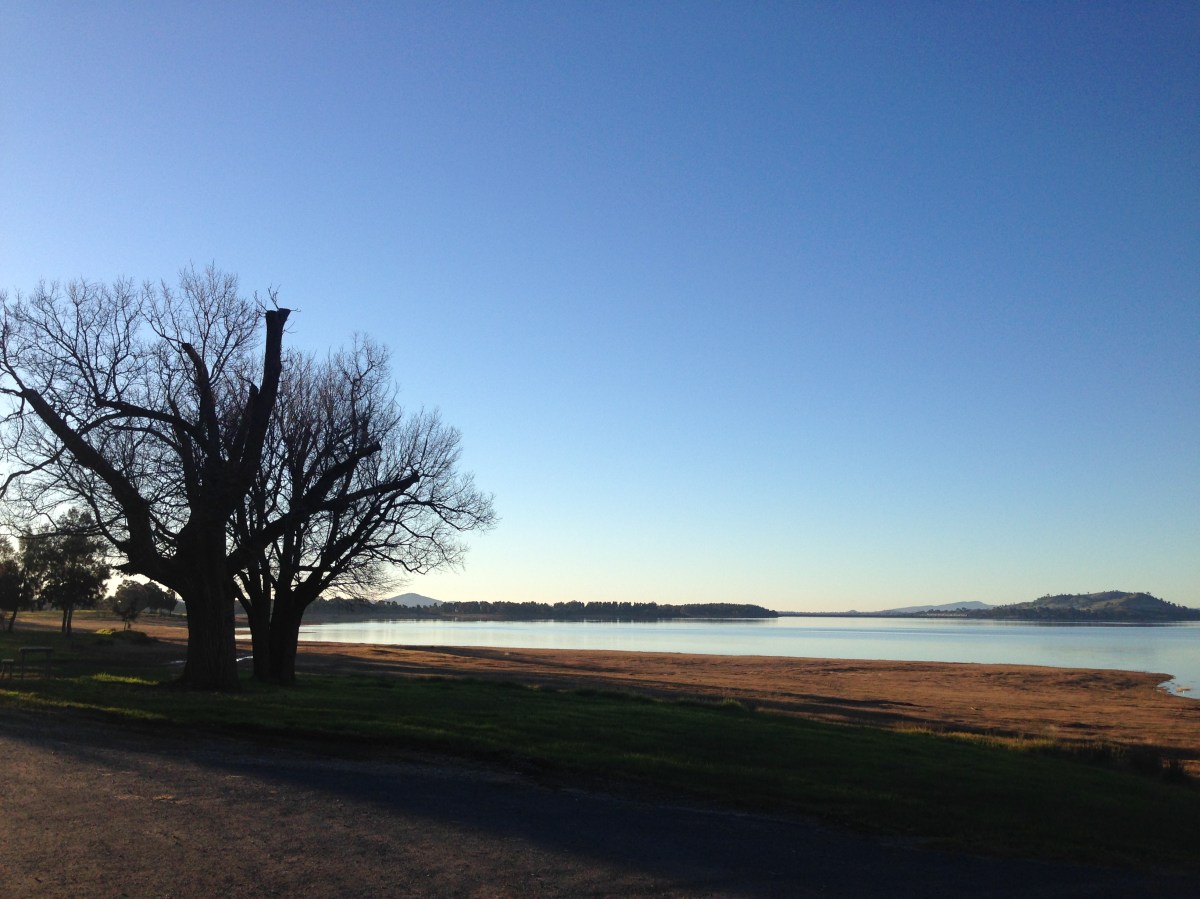
Walking along the coast line of the Tooivo Kuulas park one morning you could see why. One moment the lake looks like an impressively large pond; the next it stretches way off into the distance and conjures up memories of Balaton Lake in Hungary; yet soon enough you find out that it’s not a lake at all but just another link in the supply chain to the Baltic Sea.

It struck me that the same case could be said for student attainment. How can a country’s education system said to be performing well? Through its ratings on the PISA scale? Numbers of students who graduate into work on completion of their undergraduate study? Aggregated ratings on a mental health scale of well being? Like the lakes in Finland, it depends on how you count them. My top PISA rating may be nothing more than a drop in your Baltic Sea when it comes to evaluating the relevance those ratings have on learners’ lives.

Whilst it’s temporarily startling that Espoo has a disputed number of golf courses in its territory, it is comforting to think that if we can’t count golf courses with confidence, we can confidently be a little less confident about the value of numbers when it comes to understanding the effects of cultural education on our children.

Track of the Ironmasters Connecting communities with the heritage of the Workington and Cleator railroads

ART GENE AND SUSTRANS PRESENT: Track of the Ironmasters

Track of the Ironmasters is a unique arts based project which aims to connect communities in West Cumbria to their rail and wider industrial heritage and the natural environment on Sustrans’ popular Sea-to-Sea routes Whitehaven to Rowrah and Lowca to Seaton and Siddick.

Using Art Gene’s innovative approach to community consultation, looking at the social natural and built environment, the project will identify and create a series of ‘Community Stations’ or community hubs areas of focussed interest and need along the rail track and will facilitate communities to reflect on their local stories, histories and wildlife around these ‘stations’.

Art Gene also aims to identify people to act as ‘Station Volunteers’ drawn from local communities and then work with them to help collect information, stories and histories about their history, environment, people and place.

Track of the Ironmasters aims to uncover the rich local stories, and meet the people that make this route a unique place.

This consultation project will inform the basis of future developments, installations and artworks along the Track of the Iron Masters routes. The project has already started with site visits to the tracks and to community groups and interested organisations around West Cumbria. As a result of this consultation we are delighted to announce that the formal launch of the project will take place as follows:

Tuesday 14 July          Launch in Workington at the Helena Thompson Museum
Wednesday 15 July     Launch in Whitehaven at the Haig Pit Colliery Museum

Both launches will take place between 6pm and 9pm: refreshments will be provided.

Following the launches, we will be providing free ‘Station Volunteer’ training at the same venues as follows:

Saturday 25 July  Training at in Workington at the Helena Thompson Museum
Sunday 26 July     Training in Whitehaven at the Haig Pit Colliery Museum

Both training days will run from 10am to 3pm and will be free to participants. Refreshments will be provided.

Background to Art Gene

Art Gene has developed an international reputation for creating acclaimed art works and project across the social, natural and built environment in partnership with some of the most socially and economically deprived areas of Cumbria and Lancashire over the past 12 years. Led by Maddi Nicholson and Stuart Bastik, co-founders of the company, Art Gene has developed a unique approach to engage with communities of interest to co-create artworks which build pride and revealing local heritage and is delighted to be working in partnership with sustrans to deliver this unique project in West Cumbria.

Art Gene have been working with Morecambe Bay Partnership, researching and engaging communities of the Morecambe Bay area for the past 2 years, building up an extensive resource of photographs, interviews, and data, and developing a deep understanding of the social and economic influences on the communities of the Bay.

Currently we are engaging with communities in four geographic areas, of Morecambe Bay: the Furness Peninsula, the Cartmel Peninsula, Arnside and Silverdale and Morecambe and Heysham. We have delivered a series of road shows, guided walks and training events all designed to facilitate the exchange of information and ideas and to capture local intelligence. This research underpins Art Gene’s new series of four “Seldom Seen” maps that we have been commissioned to print for the Places and Spaces strand of Morecambe Bay Partnership’s Headlands to Headspace programme. We have also been commissioned by Morecambe Bay Partnership to produce four smart phone apps to interpret the history and culture of the Bay and to complement the maps and the other projects in the H2H programme. Both the maps and the apps will be delivered in July 2015.

Further information and contact details:
Dr. Nick Owen MBE
Project Manager, Art Gene,
Mobile  077422 71570
Email     artgenenick@btconnect.com

South Walney Master Plan: your chance to get involved with Art Gene in designing a new plan for the site.

Art Gene has been working with Cumbria Wildlife Trust for the past two years to develop a project to engage more people with the natural environment at the South Walney Nature Reserve, one of 43 reserves the Wildlife Trust manage throughout Cumbria.

Due to support from Arts Council England and WREN, Cumbria Wildlife Trust has now commissioned Art Gene to design a new plan for the site: a ‘Master plan’ for the South Walney Reserve which will include unique features designed by Art Gene’s resident artists. The ‘Master Plan’ will include the history of the site and its former uses, as well as a new plan for the future.  They will also design and construct two innovative, sustainable structures on the Reserve to act as hides, education spaces, family visitor facilities and tourist attractions.

We want to involve the local community in helping with the master planning process and to contribute to the design of the two installations which will finally be installed on site with the assistance of the South Walney site warden.

This is where you come in!

Art Gene will be hosting three community consultation events which we would like to invite you to attend. At the events, you’ll be able to come and share with us your ideas, histories and thoughts and provide us with advice and guidance on how the site can be best developed. For instance, do you have memories, old photos, local knowledge of the wildlife, the Lighthouse, Hilpsford Fort, salt works, oyster farm, gravel pits or the reserve as it was in the past that you would be happy to share with us? We’ll be consulting the wider community on what it thinks the greatest assets of the site are, and how can they be developed and preserved for the wider community.

Community Engagement Events Timetable
Friday 27 February     Art Gene  Barrow LA14 5TY  7pm – 9pm 
Saturday 28 February    Cumbria Wildlife Trust,    South Walney Nature Reserve LA14 3YQ     2pm – 4pm                                                            
Sunday 1 March            Cumbria Wildlife Trust,    South Walney Nature Reserve LA14 3YQ     2pm – 4pm
 If you would like to be involved in any of these meetings or would like more information, please email me at artgenenick@btconnect.com


What did the Romans ever do for us? Why community music making needn’t suffer when the Romans leave town. A call out to community musicians!

I’ve been invited by Lee Higgins and Brydie-Leigh Bartlett to contribute a chapter to the forthcoming Oxford Handbook of Community Music (OHCM).

The aim of their book is to present a collective statement that shows how community music is often part of a larger eco-system of arts education. The mixture of chapters from both emerging and established scholars and practitioners has been chosen to define, challenge, and speculate on emergent themes, theoretical frameworks, and contexts and processes for practice. While these chapters will feature a diversity of topics, approaches and authors, the resulting collection will be coherently structured into five parts that come together to provide a “one-stop” accessible text.

The book is intended for an academic audience at all levels: undergraduates, postgraduates, faculty and researchers interested in community music, music education, music therapy, and arts education more broadly. The audience will also include community musicians, music industry members, as well as professionals from other fields interested in community music making, such as health professionals, social workers, youth workers, community cultural development workers, and educators.

 The abstract of my chapter is as follows.

 As Molesworth might have said in Down With Skool, ‘any fule kno’ that the impact the Romans have had on us is an unending list of civilising and culture enhancing benefits. Just take our roads as an example: they are long and straight, invariably lead to Rome, connect our major cultural centres, revolutionise industry and business growth and are directly responsible for the Highway Code and Motorway Service Stations.

The Arts, like any industry, have been blessed by the Roman approach to road building: so much so that we now regularly talk about arts and cultural infrastructure as if it were some kind of super cultural highway system.  That infrastructure creates the biggest cultural players, determines how they connect with each other, and sets the rules on who else gets to set out on the nations cultural highways. It has its own version of the Highway Code with qualifications, progression opportunities and rules of engagement to boot.

But what happens when the Romans leave town?

We’re seeing the effect of that now in our highways and byways. Roads fall into disrepair. Potholes are rife. Signage points in the wrong direction. We realise we’ve become reliant on a system which cannot do everything it promised to. The centre, as usual, can’t hold and things start to fall apart.

What we forget in the gloom of broken highways and damaged cultural motorway infrastructure, are the byways which existed before the Romans ever trampled over our green and pleasent land.  We used to have green roads, white roads, turnpikes, ridgeways, death roads and all manner of connections which allowed us to connect with differing communities and make sense of the wider world.

With our larger cultural infrastructures such as the Arts Council and the local authorities facing whole sale restructuring, and hugely inflating competition for ever dwindling public resources, the Romans are now leaving town too. The promises of infrastructure – careers, qualifications, shorter journey times are now well and truly found wanting.

My chapter aims to examine the impact of the change of cultural funding on community music from 2008.

It will identify the highways and byways of old and make new connections on the equivalent of our white roads which don’t rely on the grace, favour and declining ability of the big funders of old to help us plot our way through the current contemporary cultural economy.

It will identify new cultural economies and new coherent multi-nodal cultural connections which demonstrate how cultural villages can connect, supply each other, develop their own longevity and take some ownership back of their own destiny.

It will be structured around the following framework:

Public funding for community music since 2008

The consequences of funding models on community practice and practitioners

The consequences of withdrawal of funding

The identification of alternative economies

New models of the economics of community music.

 If you work in the community music sector, and think I should hear about your work for possible inclusion into the chapter within the guidelines above, please feel free to drop me a line.

Background Notes

Community music as a field of practice, pedagogy and research is coming of age. The internationalization of the field has brought insights from cultural contexts, which are challenging and problematizing accepted approaches, priorities and ideas within the field. The increase of scholarship and academic courses has significantly increased the amount of people engaging in community music, and these new voices, agendas and contexts indicate that the field is continuing to expand, diversify and mature.

The OHCM sets out to capture the vibrant, dynamic and divergent approaches that now characterize the field, but also chart the new and emerging contexts, practices, pedagogies, and research approaches which will define the field in the coming decades. The OHCM will feature around 32 chapters of about 8,000 words each, and an accompanying website.


Centres, boundaries and peripheries: some thinking about Public Sector Innovation at OCF2014

I’ve been fortunate to have been invited back to Oman this month to contribute to this year’s Oman Competitiveness Forum and its work on theme of Public Sector Innovation.

I’ve had lots of dealings with the public sector in recent years; either working within it, or outside it or in its boundaries so I’m looking forward to seeing how all the Forum’s contributors open up the discussions and what recommendations emerge from that process.

From my part, I’ve started thinking about centralisation and de-centralisation by looking at what our poets and philosophers have to say about centres and edges and have found some great starting points.

One of my favourites is the Yeats poem, The Second Coming, the first stanza of which is:

Turning and turning in the widening gyre


The falcon cannot hear the falconer;


Things fall apart; the centre cannot hold;


Mere anarchy is loosed upon the world,


The blood-dimmed tide is loosed, and everywhere


The ceremony of innocence is drowned;


The best lack all conviction, while the worst


Are full of passionate intensity.

Surely some revelation is at hand;


Surely the Second Coming is at hand.


Working within the social enterprise sector recently means that the notion of the centre not being able to hold and things falling apart is something we are only too well aware of.

Earlier, the German writer, Johann Wolfgang van Goethe argued that political centralization would lead to the destruction of all culture. In his conversation with Johann Peter Eckermann he wrote:

“To be sure, the state has been compared to a living body with many parts, and a state’s capital thus might be compared to the heart, which supports the life and well-being of its near and distant parts. If the parts are very far from the heart, however, the flow of life will become weaker and weaker… 

“What makes Germany great is her admirable popular culture, which has penetrated all parts of the Empire evenly. And is it not the many different princely residences from whence this culture springs and which are its bearers and curators? Just assume that for centuries only the two capitals of Vienna and Berlin had existed in Germany, or even only a single one. Then, I am wondering, what would have happened to the German culture and the widespread prosperity that goes hand in hand with culture.

“Furthermore, look at the number of German theaters, which exceeds seventy, and which cannot be disregarded as bearers and promoters of higher public education. The appreciation of music and song and their performance is nowhere as prevalent as in Germany, and that counts for something, too.

“Then think about cities such as Dresden, Munich, Stuttgart, Kassel, Braunschweig, Hannover, and similar ones; think about the energy that these cities represent; think about the effect they have on neighboring provinces, and ask yourself, if all of this would exist if such cities had not been the residences of princes for a long time.

“Frankfurt, Bremen, Hamburg, Luebeck are large and brilliant, and their impact on the prosperity of Germany is incalculable. Yet, would they remain what they are if they were to lose their independence and be incorporated as provincial cities into one great German Empire? I have reason to doubt this.”

We’ve been having similar discussions in the UK recently about how London and the South East’s centralising tendencies come to dominate much political, economic and cultural life and whilst the recent referendum on Scottish Independence had a galvanising effect on that debate, time will tell whether or not any permanent change has been wrought in our political landscape.

On the other hand you can always trust a Marxist to upset the liberal apple cart.  Terry Eagleton said in 2001:

These days, centrality is distinctly uncool. The centre has been marginalised, and marginality, like Bohemian Manchester or Cornish fishing villages, is the place to be. With so many groups muscling in on them, from sexual and ethnic minorities to dog-on-a-rope anarchists, the margins have grown so crowded that there is now standing room only. Indeed, they have bulged to spread over most of the page. Like elitism, marginality isn’t possible if too many people want to do it. It is an uncomfortable place, yet, oddly, it is where a lot of people want to be. In this sense it is a bit like Bangkok or the Aran islands.

So whilst we might enjoy – or not – our place in the centre, in the boundaries or right out on the edges, there’s a lot to think about how these relationships play out for all of us who have to contend with the public sector in all its many guises across the world.

Further information about the OCF 2014 programme can be seen here.